Sustainable Design
Humankind's impact on our environment


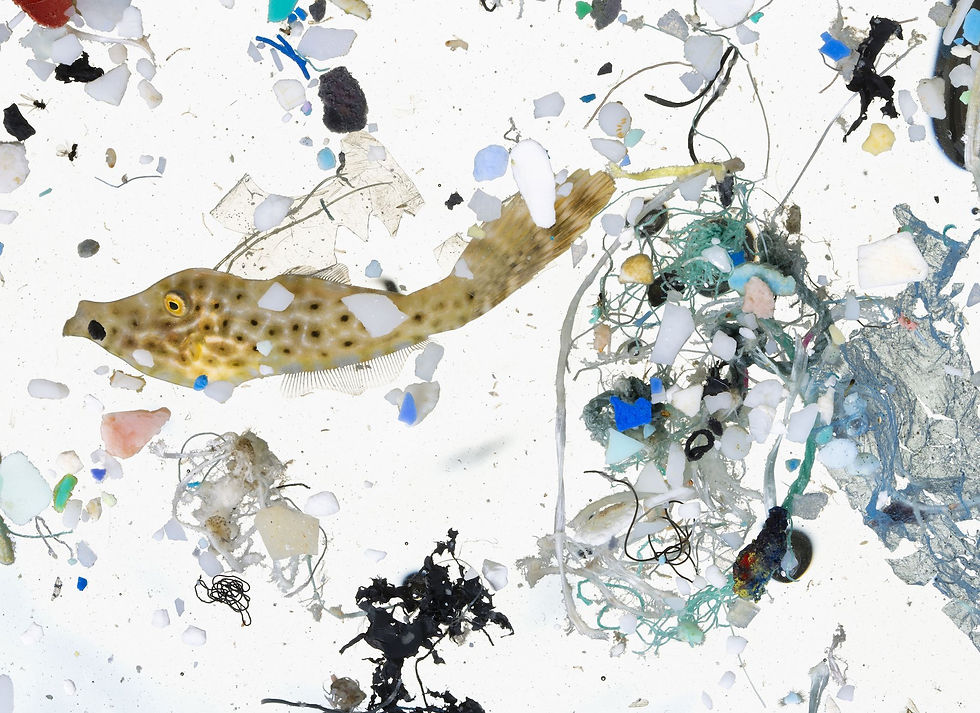
Humans impact the physical environment in many ways: overpopulation, pollution, burning fossil fuels, and deforestation. Changes like these have triggered climate change, soil erosion, poor air quality, and undrinkable water.
Plastic pollution is just one of many complex environmental threats.
So what can we do about it?


Can you think of any designs which help solve environmental problems?
Designers and engineers have the important jobs of creating objects and systems that work for our needs today while thinking about the Earth's future.
Industrial designers are those who focus on products that are mass-produced. These products are things that most families use daily. Unfortunately, a lot of these products use plastic which we all know is very harmful to the environment.
Sustainable industrial design focuses on creating products that help solve problems faced by our environment instead of contributing to them.

The Toothbrush
What problems come to mind?
The Design and Engineering Process
For this assignment, you will be using the design process to design your own solution to plastic consumption.

Define the problem
Research:
Collection information
Brainstorm and analyze multiple solutions to your design problem
Develop solutions/build a model
Present your ideas - gain feedback
Improve your design
2
1
3
4
5
6
1
1
Define the problem
You will be designing a product that solves a problem dealing with plastic consumption.
Your first step is to identify a problem.
Are there products that you find especially troubling for the environment? Are you concerned about a specific ecosystem?
Is there a plastic product you use everyday that you tend to throw away regularly?
To help you get started, create a list of everything plastic you use on a daily basis. Are these products necessary? Is it necessary that these products are made from plastic? Can you see an alternative?
Complete step one by submitting the following:
1. Your problem: Write a complete sentence clearly stating your problem. Your statement should include the cause of the problem and the negative effects of the problem.
Example:
Toothbrushes made out of disposable plastics are contributing to plastics found in landfills and unable to decompose.
1
2
Research. Collect information about your problem and possible solutions
This is one of the most important steps of the design process. Without knowing all there is to know about your problem, your design solutions will be limited.
The product in question
What is its use?
positives and negatives of the product?
What is it made from?
What is its life cycle?
Who made the product?
Is this a common household product?
-
How many (products) do you have in your household(s)?
-
How many (products) do you think you have in your household?
-
How often do you or your family members replace your (products)?
-
What do you and your family members do with old (products)?
The problem?
How does this problem effect the environment?
Possible Solutions?
Has this problem been solved by anyone else?
If so, how have these solutions worked or not worked?
1
3
Brainstorm and analyze multiple solutions to your design problem
This is the fun part! Start brainstorming ideas to solve your problem.
Designers never stick to one option. Brainstorm MANY ideas.
Use a piece of drawing paper to sketch your ideas.
Complete step 3 by doing the following:
You have brainstormed at least 5 different solutions to your problem.
Your solutions are sketched out with labels and a description.
Your descriptions will include:
-
materials - what is your new product made from?
-
expected life cycle of product
-
Impact on environment
-
Impact on the product's function - how well will it work?
Here are some questions to consider when examining a product’s lifecycle:
-
How much energy is needed to…
-
acquire the raw materials?
-
assemble the product?
-
transport the product to retail locations or ship it to consumers’ homes?
-
-
How much energy does the product consume?
-
How much waste does the manufacturing process produce?
-
Will the product be recycled or repurposed at the end of its life?
-
Will the product biodegrade quickly?
Look for materials that are:
-
Non-toxic. I don’t like being poisoned – do you like being poisoned? Enough said.
-
Abundant. Materials that exist in large quantities are a better, more sustainable choice. Avoid rare materials or you run the risk of completely depleting a resource from our planet. And, as a material becomes more scarce, the price tends to skyrocket. This makes abundant materials a financially wise choice, as well.
-
Easily Reproduced. Materials that can be easily reproduced are, by definition, sustainable. Think of wood (which can be grown, harvested and regrown) as opposed to coal (a finite resource) which will inevitably run out.
-
Rapidly Renewable. Rapidly renewable materials are not only reproducible but quick to reproduce. These materials (like bamboo, cotton, natural rubber, and cork) are awesome choices for greener designs. The speedy rate at which they reproduce makes them a reliable, sustainable resource.
-
Low Waste. Some materials create far more waste to produce than others. For instance, it takes 85 lbs of material to create 1 lb of virgin aluminum, but only 7 lbs of material to create 1 lb of virgin steel. Choose materials that produce less waste.
-
Recycled, Recyclable or Biodegradable. Choose materials that can go on to live another life – either as another product or by reintegrating with the earth. You will create less waste and save energy (that would otherwise be expended creating new virgin materials) by using recycled materials.
1
4
Develop solutions/build a model

You will choose one of your solutions and create a model.
It may be tricky to create an actual model in some situations but we can always be creative!
A model is a small version of your product that is typicall to-scale (the same proportions as the actual product)
A prototype is a working model.
You will create your model out of the materials that are best suited for your needs.
This might include:
paper
cardstock
cardboard
clay
wire
1
5
Present your ideas - gain feedback
You will be presenting your ideas to the class.
Create a powerpoint or poster displaying your product.
Include the following:
-
Identify your problem
-
Provide examples of your research
-
Illustrate your proposal
What makes a design successful?
Every product that is designed must consider two main things:
FORM and FUNCTION.
Form - how well the object DOES what it is intended to do
Function - how beautiful the object looks.
1
6
Improve your design
Gather feedback and make adjustments accordingly.
Step 6 will be complete by showing the following:
Based on your feedback, what changes could you make to your product?
Environmental Design Projects


